50
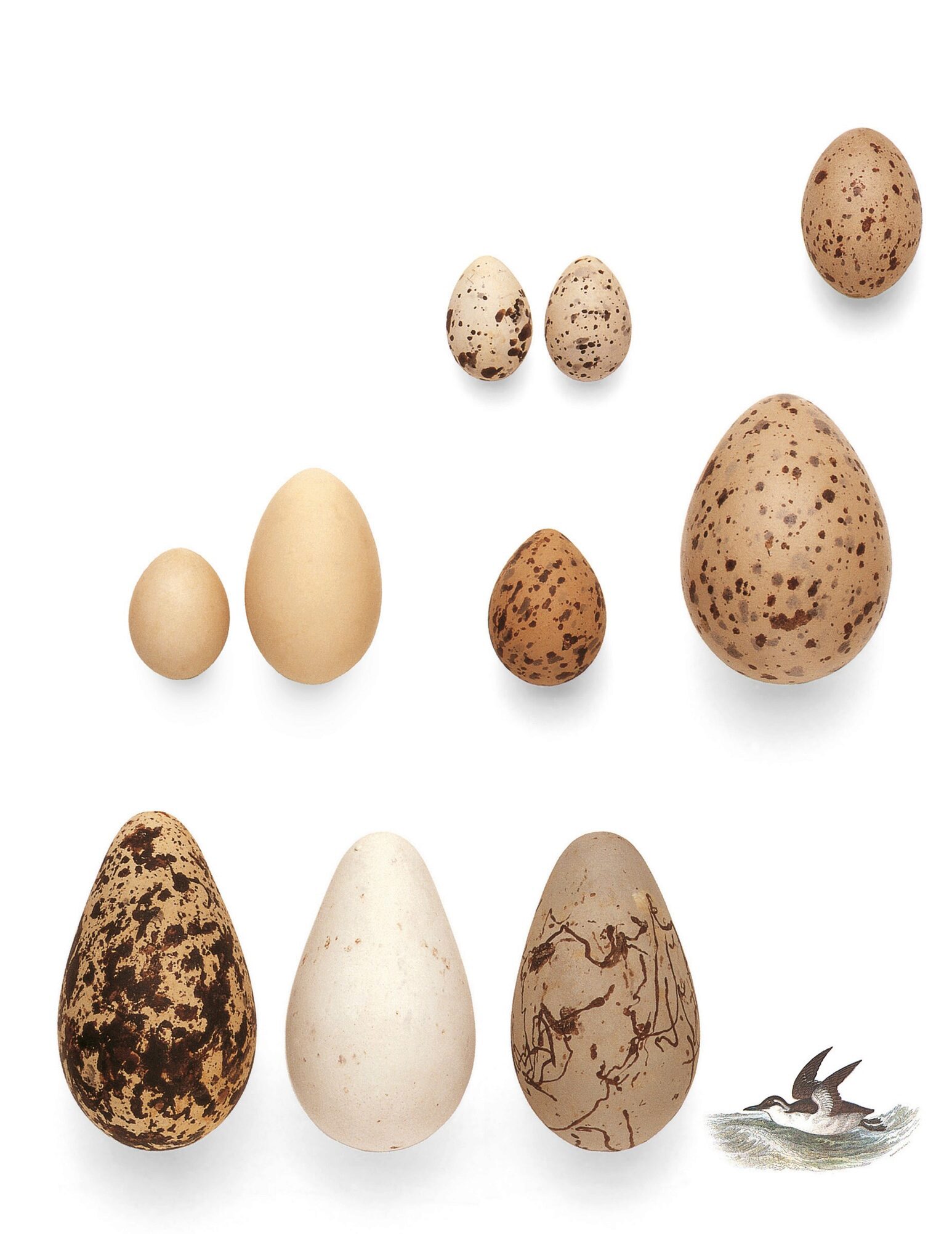
Eggs of waterbirds
and waders
Seabirds that only come ashore
to breed usually lay a single egg on
a rocky ledge. Wading birds lay
camouflaged eggs, to protect them
on exposed coasts and estuaries.
Fostered
eggs
A moorhen may
dump its eggs into the
nests of other moorhens. After
this, it settles down to raise up
to a dozen of its own eggs itself.
A tern’s eggs
Little terns usually lay their eggs in
shingle. The eggs’ delicate patterning
hides them among the pebbles.
Gull eggs
The great black-backed gull
lays its eggs on the ground.
Their speckled pattern
hides them from predators.
Eggs under guard
Common terns fiercely
protect their eggs by diving
directly at intruders.
Pointed shape
The guillemot produces one of the
most strikingly shaped and variably
coloured eggs of all birds.
Guillemots do not build nests.
Instead, each female lays its
single egg directly on to a bare
cliff ledge.
Normal
egg
Undersized
egg
Variations in size
A clutch of eggs sometimes contains an
undersized specimen. These two eggs are both
from a shoveler duck.
Important
information
It is illegal to collect or
handle wild birds’ eggs.
Cream and brown formWhite formStreaked grey form
Guillemot